

Pulley Lagging
Download
Pulley Lagging & Wear Protection
Pulley wear, belt slippage, and abrasive material handling conditions can significantly reduce conveyor efficiency and equipment lifespan. ASAS Technologies Company supplies advanced pulley lagging and wear protection systems designed to improve friction performance, reduce maintenance requirements, and protect critical conveyor components under heavy-duty operating conditions. Our solutions are suitable for conveyor pulleys, transfer chutes, hoppers, silos, bucket elevators, and material transfer systems.
1. Rubber Lagging
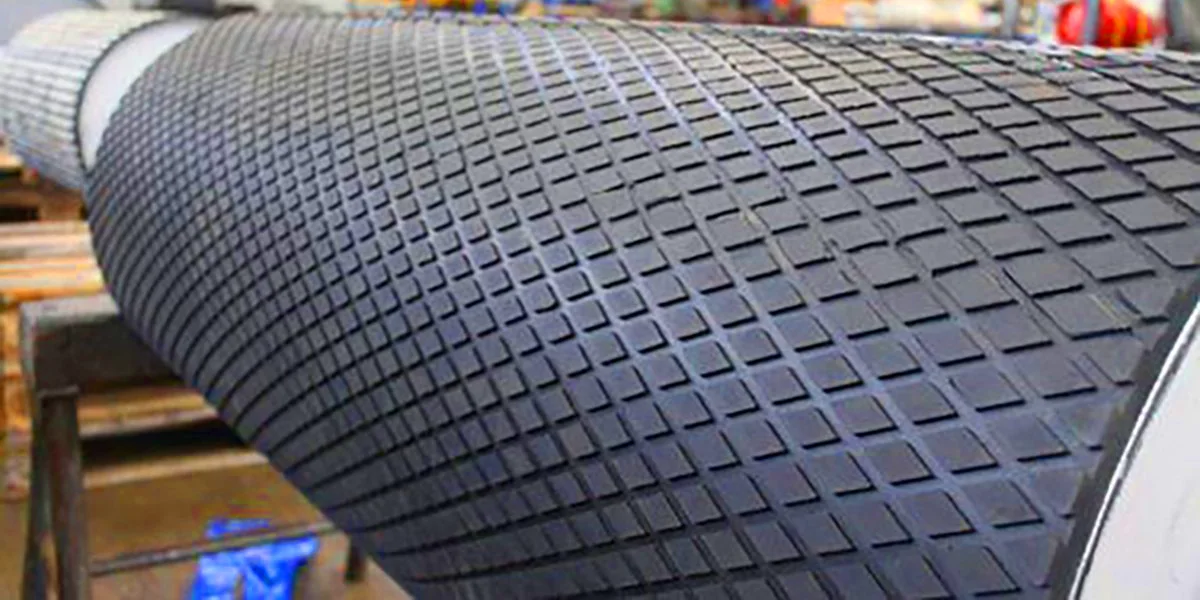
Rubber Lagging is designed to improve pulley traction, reduce belt slippage, and protect conveyor pulleys from wear and corrosion.
Features
- CN bonding layer deliver fast bonding
- CN bonding layer can be bonded directly without roughing
- Excellent bonding, no de bonding
- Good wear resistance, longer service life
Technical Specifications
- Tensile Strength MPa: 20
- Elongation at Break: 600%
- Hardness Shore A: 63±5
- Abrasion Loss mm3: 110
- Temperature: -40˚C TO 80˚C
- Peel Strength MPa: 13
| Description | Size |
|---|---|
| Rubber Lagging | 8 x 2000 x 10000 mm |
| Rubber Lagging | 10 x 2000 x 10000 mm |
| Rubber Lagging | 12 x 2000 x 10000 mm |
| Rubber Lagging | 15 x 2000 x 10000 mm |
| Rubber Lagging | 20 x 2000 x 10000 mm |
2. Diamond Strip Rubber Lagging
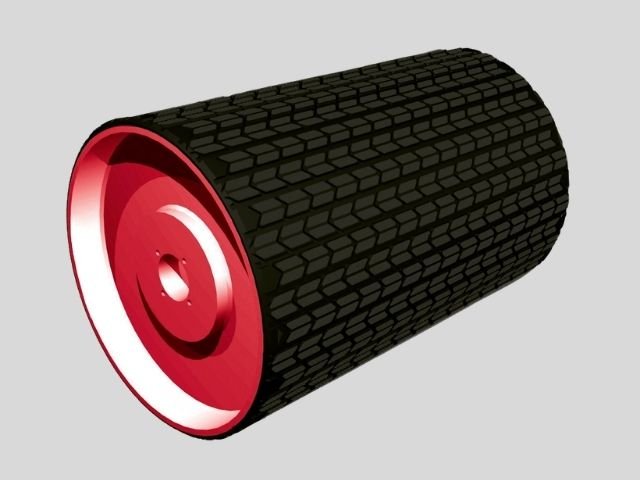
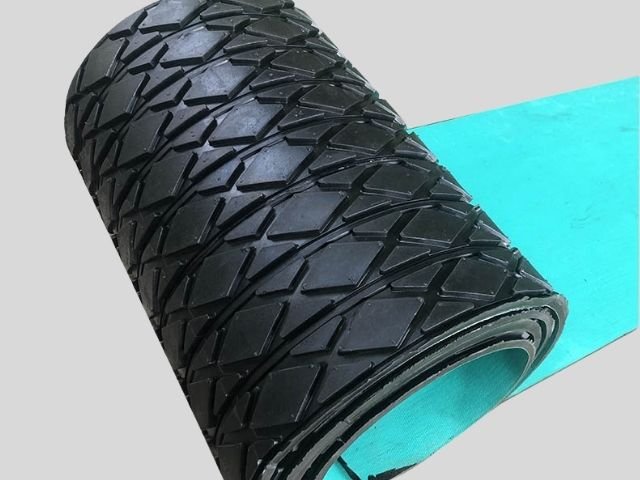
Diamond Strip Rubber Lagging is designed for drive pulleys operating under low to medium load conditions where increased friction and reduced slippage are required.
Features
- CN bonding layer
- Easy to install
- Minimum wastage
- Increased friction coefficient between the drum and belt
- Shorter lead times
- High wear resistant
Technical Specifications
- Polymer: NR/SBR
- Hardness:65±5 SHORE A
- Tensile strength: 12-18mpa
- Abrasion: 90mm³
Specifications
| Thickness | Width | Length |
|---|---|---|
| 10 mm | 200 mm / 250 mm / 500 mm | 2m - 30m |
| 12 mm | 200 mm / 250 mm / 500 mm | 2m - 30m |
| 15 mm | 200 mm / 250 mm / 500 mm | 2m - 30m |
3. Segmented Shell Rubber Lagging
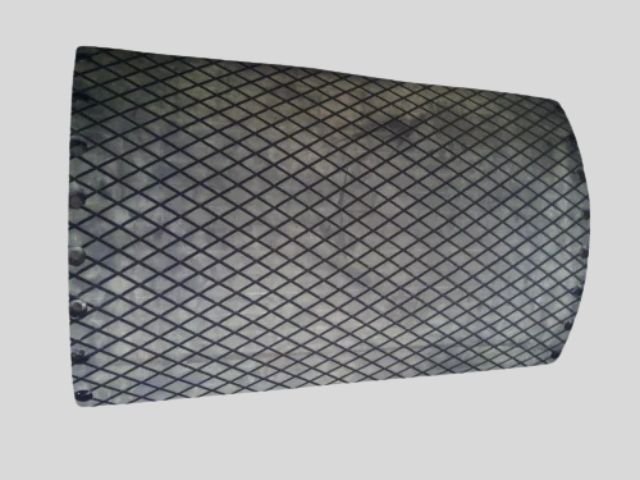
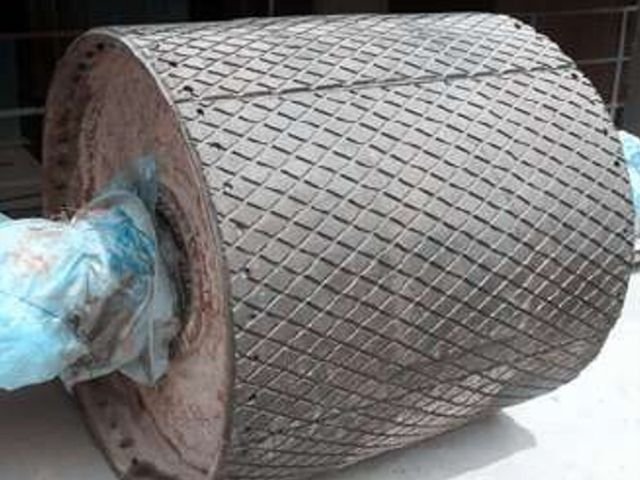
Segmented Shell lagging is easy to install on site on Bucket Elevator . Reducing down time and productivity. Segmented shell diamond rubber lagging have following features:
1. Enhanced friction: The diamond design can increase friction, improve the grip of
materials and reduce sliding.
2. High-quality rubber: High-quality rubber materials can significantly improve the wear resistance of the roller and extend its service life; good elasticity and chemical resistance, suitable for high-load transportation and harsh environments.
Technical Specifications
| Thickness | Diameter |
|---|---|
| 15,18 mm | ≥ 300mm |
4. Slide Rubber Lagging
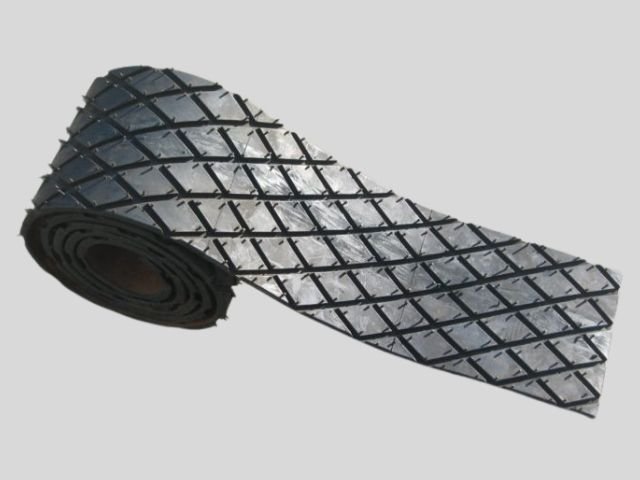
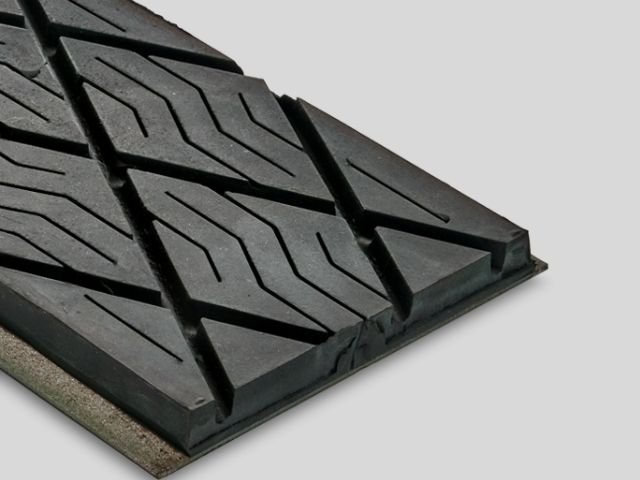
Slide Rubber Lagging is designed for applications where pulley removal is difficult or installation space is limited, particularly for bucket elevator systems.
Technical Specifications
- Material: SBR+NR compound
- Tensile Strength: 11.4 MPA
- Hardness: Shore75±5A
- Elongation at break: 410%
- Abrasion Loss: <110mm3
| Thickness | Diameter |
|---|---|
| 15,18 mm | ≥ 300mm |
5. Slide Ceramic Rubber Lagging
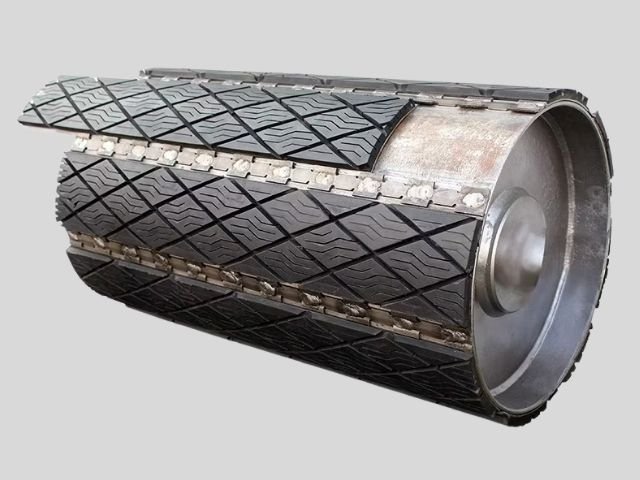
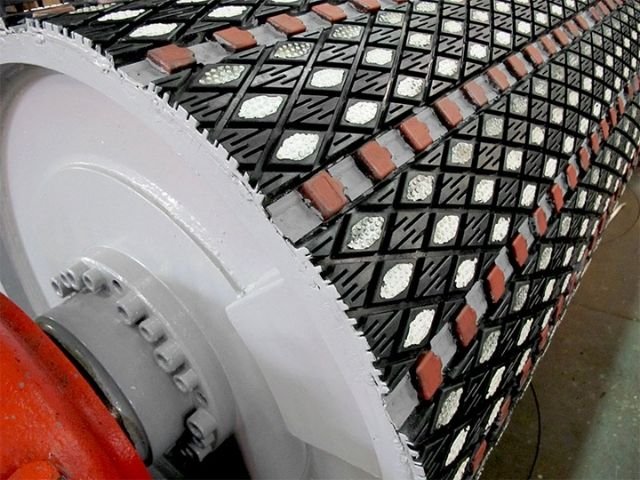
Slide Ceramic Rubber Lagging combines ceramic wear resistance with rubber flexibility to provide enhanced pulley protection in highly abrasive operating conditions.
- Al2O3: 92%
- Volume Density: 3.65~4.5g/cm3
- Tensile Strength: 20 MPA
- Compressive Strength: 200 MPA
- Hardness: 9 Mohs
- Elongation at break: 410%
- Abrasion Loss: 120mm3
- Water Absorption: <0.02%
Slide Lagging Retainer
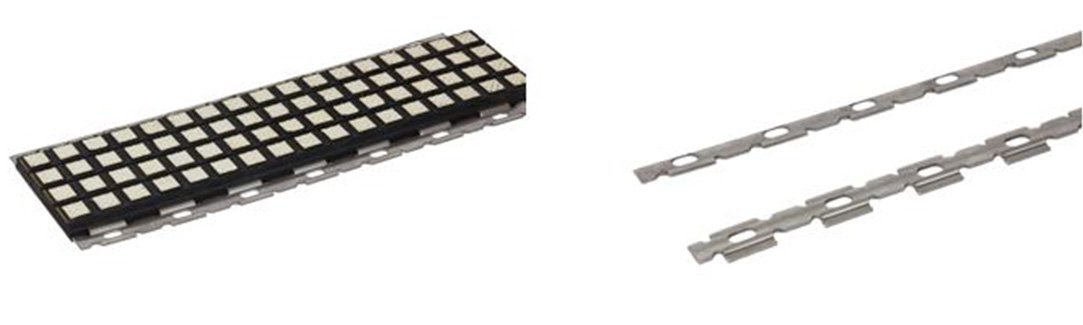
| Material | Thickness |
|---|---|
| Galvanized Steel | 2 mm |
6. Ceramic Lagging
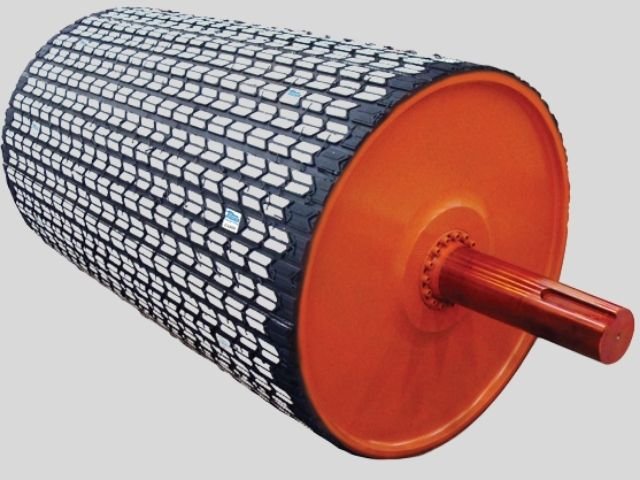
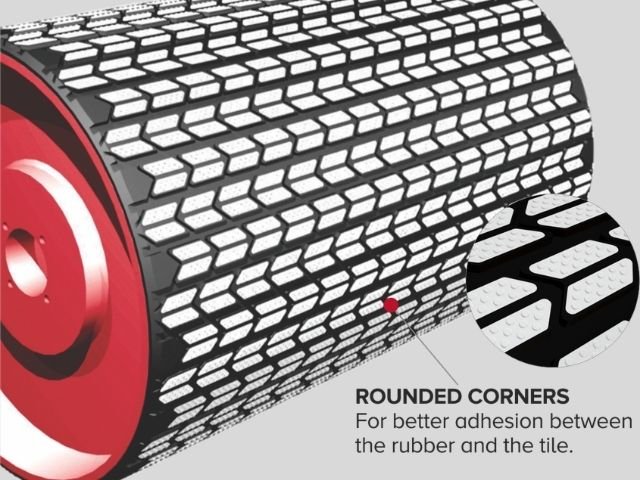
Ceramic Lagging is designed for conveyor pulleys operating under wet, muddy, and highly abrasive conditions where maximum friction and wear resistance are required.
- Increased Friction Coefficient, reduce belt slippage
- CN bonding layer can be bonded directly without roughing
- Excellent bonding, no de bonding
- High Wear resistance alumina tiles, longer service life
Technical Specifications
- Tensile Strength MPa: 20
- Elongation at Break: 600%
- Hardness Shore A: 63±5
- Abrasion Loss mm3: 110
- Temperature: -40˚C TO 80˚C
- Peel Strength MPa: 13
- Aluminium Oxide: 95%
- Specific Gravity g/cm3: 3.7
| Description | Size |
|---|---|
| Ceramic Lagging | 15 x 500 x 800 mm |
| Ceramic Lagging | 15 x 500 x 1000 mm |
| Ceramic Lagging | 15 x 500 x 1200 mm |
| Ceramic Lagging | 15 x 500 x 1450 mm |
| Ceramic Lagging | 15 x 500 x 1650 mm |
| Ceramic Lagging | 15 x 500 x 1850 mm |
| Ceramic Lagging | 15 x 500 x 2050 mm |
| Ceramic Lagging | 15 x 500 x 2250 mm |
| Ceramic Lagging | 15 x 500 x 10000 mm |
7. Ceramic Rubber Liner With CN Layer
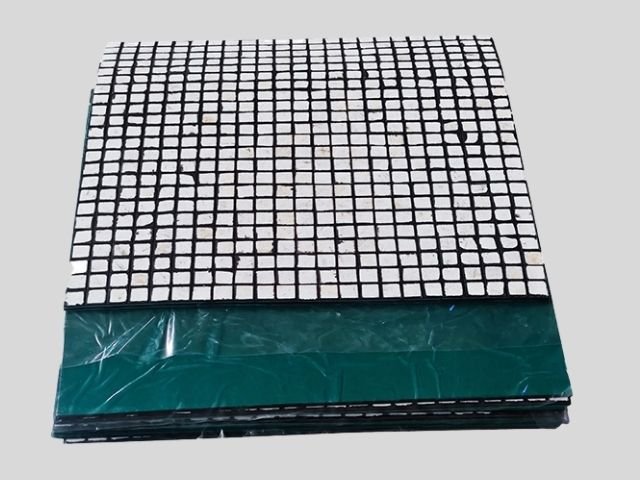
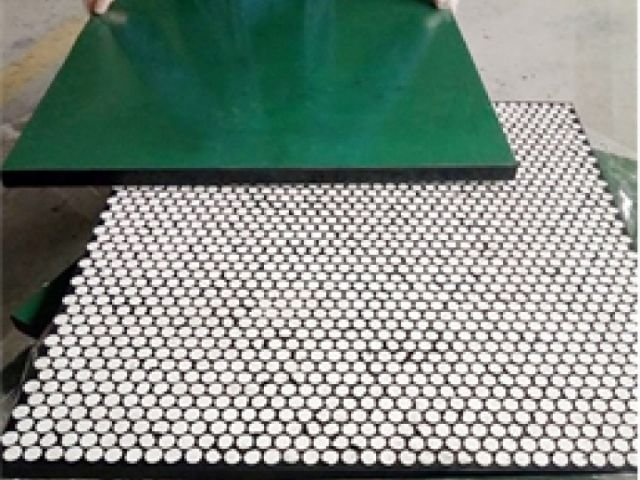
The two-in-one composite wear-resistant ceramic lining plate is made by vulcanizing
alumina wear-resistant ceramics under high temperature conditions and inlaying it into a steel tank filled with special rubber to form a wear-resistant ceramic composite lining plate.
Applications
It is widely used in wear protection of Silos, Hoppers, Chutes and other equipment in coal conveying, ash discharge systems, and material conveying and batching systems.
Technical Specifications
- Alumina(Al2O3): 92%
- Density: 3.62 g/cm3
- Hardness: 1000 HV30
- Fracture Toughness 3.82 MP.a 1/2
Rubber
- Material: NR & SBR blend
- Gravity: 1.12 g/cm3
- Tensile Strength: 21 MPa
- Hardness: 60±5 Shore A
- Elongation: 500%
- Abrasion Loss: 100 mm3
- Aging Coefficient (70C°x 48h): 8.7%
- Temperature Range: -40˚C TO 80˚C
Steel Backing Plate
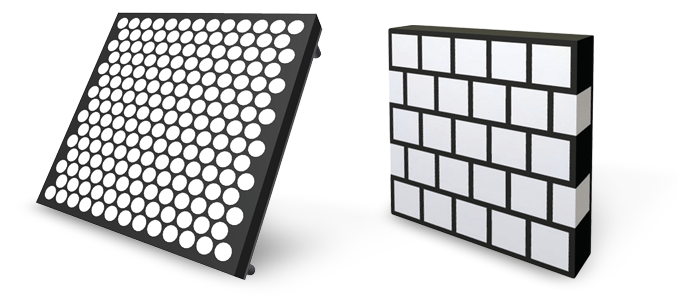
- Mild Steel or Stainless Steel on request
- Adhesion between rubber and ceramic: min. 21kN/m
- Adhesion between rubber and steel backing plate: min. 21kN/m
- Ceramic Liner: 500x 500x 14 mm
8. Transfer Chute Wear Ceramic Rubber Liner Plates
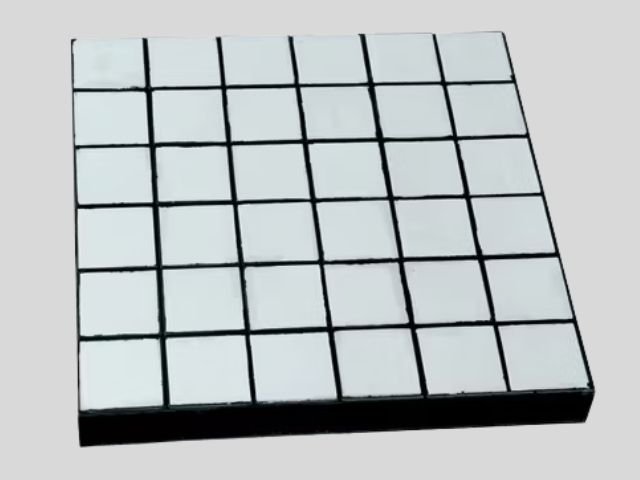
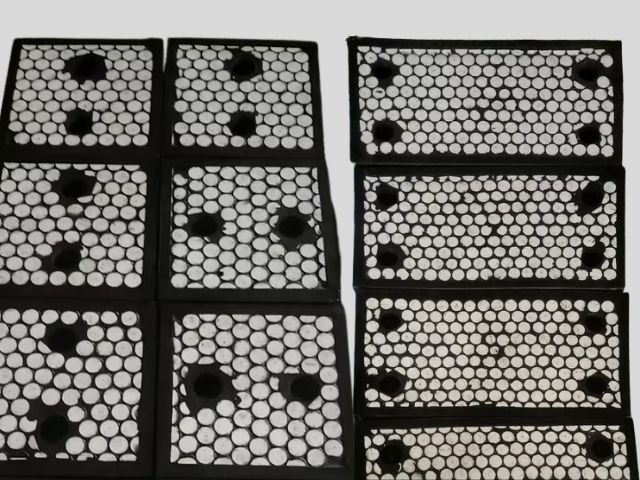
Through vulcanization / Bonding the alumina ceramic plates or ceramic tiles are
installed into the special steel plate to form a wear resistant steel plate. The wear resistant plate will be fixed on the abrasive surface of equipment by high strength adhesive or welding , the equipment is more resistant to time and wear and will be used longer. They are
- Good Abrasion Resistance
- Good Thermal Stability and Excellent Corrosion Resistance
- Light Weight
- Easy and fast to fix on site
| Chemical Composition And Physical Properties of Alumina Ceramics | ||
|---|---|---|
| Al2O3 | ≥ 92% | ≥ 95% |
| Volume Density | ≥ 3.6g/cm3 | ≥ 3.7g/cm3 |
| Rockwell Hardness | HRA ≥ 85 | |
| Ceramic Abrasion Test | 0.0005g (P=74N, N=800rpm, t=30min, Quartz Sand) | |
| Physical Properties of Rubber | ||
| Pull-apart Strength | 14 MPa | |
| Pull-apart Prolongation | 250% | |
| Shore Hardness | 55 - 65 | |
| Permanent Deform | 30% | |
| Sizes | Length/Width | Ceramic Thickness | Rubber Thickness | Steel Thickness |
|---|---|---|---|---|
| 250×250×15mm | 250/250mm | 5mm | 5mm | 5mm |
| 300×300×16mm | 300/300mm | 8mm | 4mm | 4mm |
| 500×500×25mm | 500/500mm | 15mm | 4mm | 6mm |
| 500×600×30mm | 500/600mm | 20mm | 6mm | 4mm |
| 600×300×35mm | 600/300mm | 25mm | 6mm | 4mm |
| 400×500×38mm | 400/500mm | 25mm | 7mm | 6mm |
| 300×400×50mm | 300/400mm | 30mm | 12mm | 8mm |
| 300×300×63mm | 300/300mm | 50mm | 7mm | 6mm |
| 300×400mm×130mm | 300/400mm | 100mm | 18mm | 12mm |